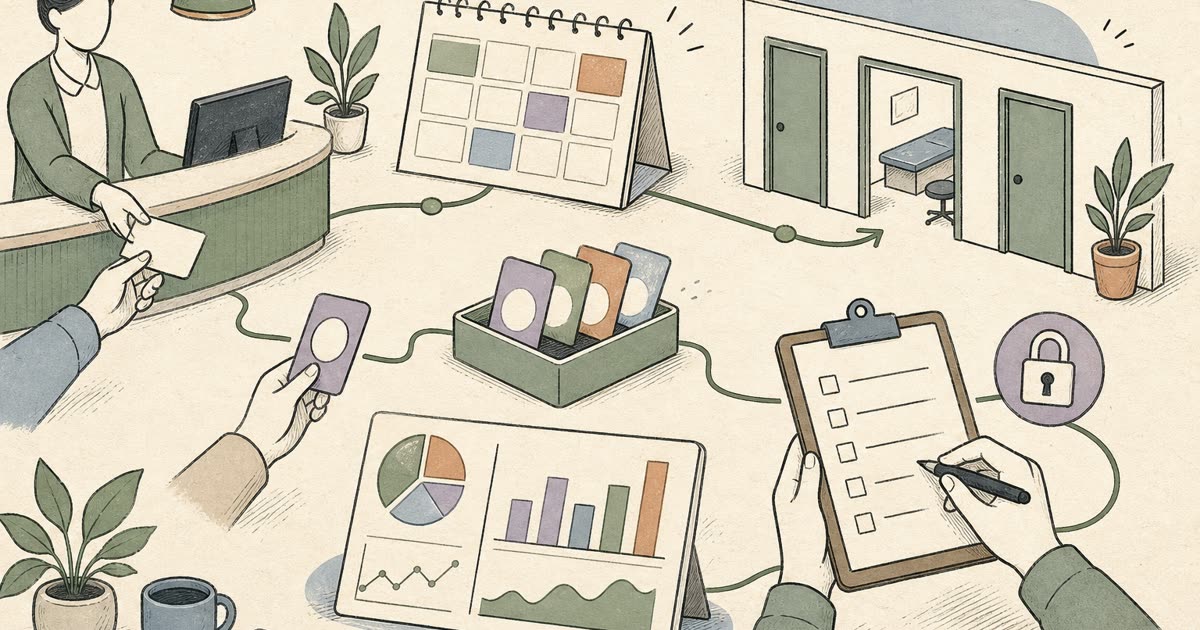

Indonesian clinics can reduce front desk friction by connecting appointments, queues, visit administration, and operational dashboards in one workflow.
Clinic flow breaks when schedules live apart
Many clinics still manage appointments, walk ins, queue numbers, visit notes, and payment follow up in separate places. The front desk can be busy while doctors see a different picture of who is waiting and why.
A practical system should connect the appointment calendar with today queue, patient arrival status, visit administration, and room capacity. The goal is not a flashy screen. The goal is fewer surprises at the counter and clearer handoffs between staff.
Appointments need rules that staff can trust
Appointment data should answer simple operational questions. Who booked, who confirmed, who arrived, who cancelled, and which slot can still be used. FHIR Appointment treats booking status, participants, time, and service context as structured facts, not loose notes.
For Indonesian clinics, those facts help protect the daily schedule. Staff can mark no shows, reschedule without losing history, and separate planned visits from urgent walk ins. Patients get clearer expectations, while the clinic keeps a record of what changed.
Queues should reflect the real floor
A queue dashboard becomes useful when it mirrors what is happening inside the clinic. Registration, vitals, consultation, pharmacy, lab, billing, and finished visits should be visible as stages rather than scattered messages.
The front desk can then explain delays with confidence. A doctor can see whether the next patient is ready. A manager can spot bottlenecks before the waiting room turns tense. Queue numbers become a shared operating language, not just a ticket.
Visit administration starts before the encounter
FHIR Encounter is useful because it frames the visit as an event with status, class, participants, period, and location. That matches clinic reality. A visit begins before clinical notes are complete and continues until administration is closed.
Good visit administration captures consent checks, insurance or payment status, assigned clinician, room, timestamps, and follow up needs. It should reduce repeated typing, not create another burden. The same visit record can support service quality, reporting, and patient continuity.
Dashboards should guide daily decisions
Clinic leaders need more than monthly totals. They need today average wait time, late arrivals, cancellations, room utilization, queue aging, unfinished visits, and staff workload. These signals help operations act while the day can still be improved.
A good dashboard also separates action from noise. Red flags should point to a person or workflow that needs attention. Trends can support staffing, service hours, reminder policies, and whether a new room or doctor session is actually needed.
Compliance and integration need clean data habits
Permenkes 24 Tahun 2022 pushes health facilities toward electronic medical records, while SATUSEHAT sets expectations for structured health data exchange. Even when a clinic starts with operational software, data quality and access control should be designed from day one.
WHO guidance on digital health also warns that technology should strengthen health systems rather than distract from service delivery. For clinics, that means clear roles, audit trails, downtime procedures, consent aware access, and data fields that can later support integration.
What Sundie can build for clinic operations
Sundie can help Indonesian clinics design an appointment, queue, and visit administration system around their real service flow. The build can start small with booking, arrival, queue stages, room assignment, visit status, and a manager dashboard.
For source alignment, the draft references Permenkes 24 Tahun 2022 record requirements, SATUSEHAT platform documentation, HL7 FHIR Appointment resource, HL7 FHIR Encounter resource, and WHO guidance on digital health interventions. The implementation should still be reviewed with clinical, compliance, and operational stakeholders.